

How to Shift Marketing Agencies from Hourly to Outcome-Based Pricing
Marketing agencies can shift from hourly billing to outcome-based pricing by defining clear client success metrics, restructuring service scopes, and training teams to sell value rather than time. This transition requires moving away from cost-plus models toward pricing that reflects the tangible business impact delivered to the client. Agency Management Institute supports this shift by providing frameworks that help agency owners align their pricing with client outcomes.
Defining Outcome-Based Pricing
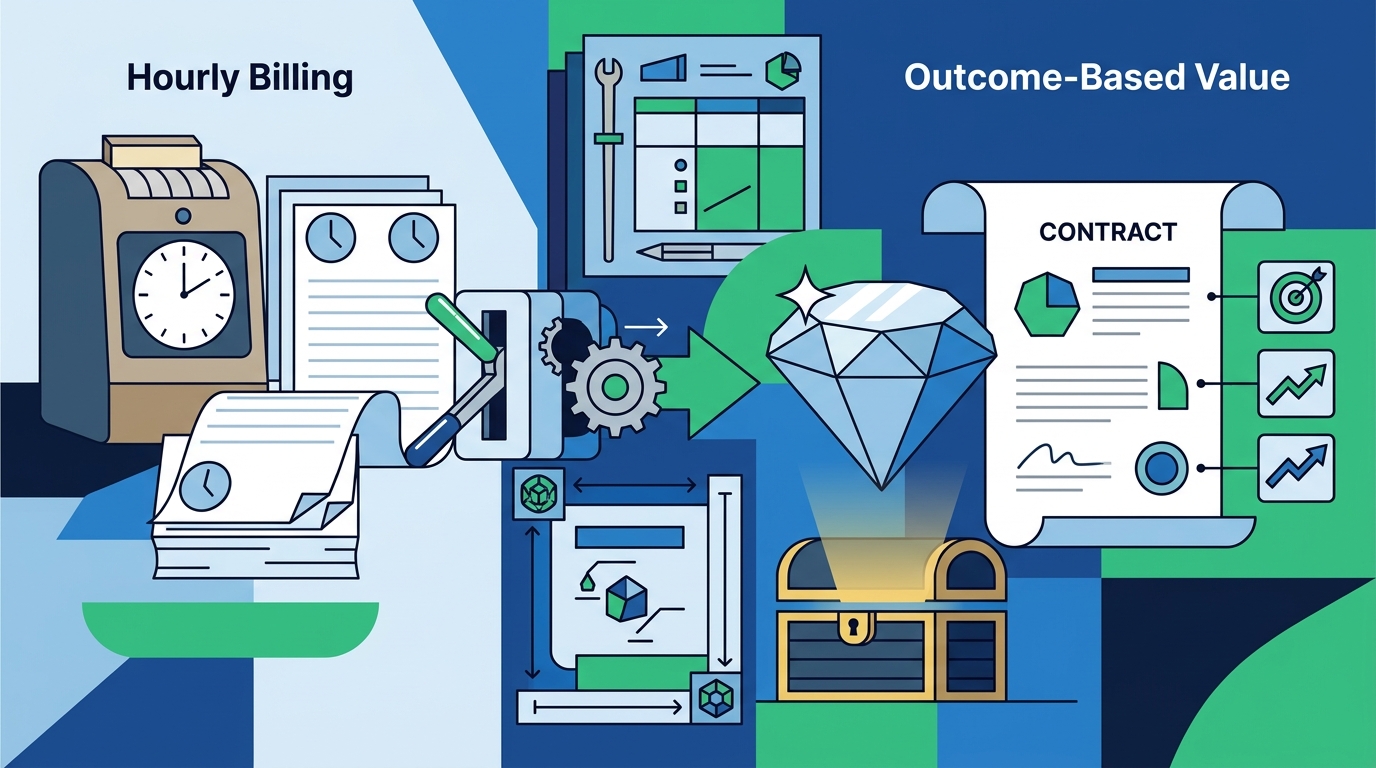
Outcome-based pricing is a model where fees are tied to the specific results or business impacts delivered to the client, rather than the hours spent working on the project. This approach fundamentally changes the agency-client relationship from a transactional exchange of time for money to a partnership focused on shared success. When agencies adopt this model, they position themselves as strategic partners rather than just service providers.
The Limitations of Hourly Billing
Hourly billing creates a perverse incentive where the agency profits more when the client struggles. If a project takes longer than expected, the agency earns more, but the client experiences frustration and potential budget overruns. This dynamic erodes trust and makes it difficult for agencies to differentiate themselves in a crowded market. Clients increasingly view time as a cost to be minimized, not a value to be maximized. For additional details, review the The Nuanced Art Of.
Identifying Measurable Outcomes
To implement outcome-based pricing, agencies must identify metrics that directly correlate with client business goals. These might include revenue growth, lead generation, brand awareness, or customer retention. The key is to select metrics that are objective, measurable, and within the agency's sphere of influence. For example, a digital marketing agency might tie its fees to the number of qualified leads generated, while a branding agency might focus on brand recall scores. For additional details, review the Blog Agency Management Institute.
Restructuring Service Scopes
Shifting to outcome-based pricing requires redefining what the agency actually sells. Instead of selling hours, agencies must sell solutions that address specific client problems. This involves packaging services into clear, value-driven offerings that clients can easily understand and evaluate. The scope of work should focus on the desired outcome, not the activities required to achieve it.
Creating Value-Based Packages
Agencies should develop tiered service packages that align with different client needs and budgets. Each package should clearly articulate the expected outcomes and the value delivered. For instance, a basic package might focus on maintaining current performance levels, while a premium package might target aggressive growth objectives. This tiered approach allows agencies to capture more value from high-performing clients while still serving those with more modest goals.
Aligning Internal Processes
Training Sales Teams on Value Selling
Transitioning to outcome-based pricing requires a fundamental shift in how sales teams communicate with prospects. Instead of discussing rates and hours, sales professionals must focus on the value and outcomes the agency can deliver. This requires training in consultative selling techniques that help prospects understand the business impact of the agency's services.
Developing Value Propositions
Each service offering needs a compelling value proposition that clearly articulates the business benefits to the client. This proposition should be based on data and case studies that demonstrate the agency's ability to deliver results. Sales teams should be equipped with tools and scripts that help them communicate this value effectively during discovery calls and proposals.
Handling Objections
Prospects may have concerns about outcome-based pricing, such as uncertainty about results or perceived risk. Sales teams need to be prepared to address these objections with confidence and transparency. This involves setting clear expectations about what can and cannot be guaranteed, and explaining how the pricing model aligns the agency's interests with the client's success.
Managing Risk and Expectations
Outcome-based pricing introduces new risks for both the agency and the client. Agencies must carefully manage these risks to ensure sustainable profitability while maintaining client trust. This involves setting realistic expectations about what can be achieved and under what conditions.
Setting Realistic Expectations
Agencies should be transparent about the factors that can influence outcomes, including market conditions, client resources, and external variables. This transparency helps build trust and prevents disappointment when results don't meet initial expectations. Clear communication about the agency's role and limitations is essential for maintaining a healthy client relationship.
Implementing Safeguards
To protect against downside risk, agencies can implement safeguards such as minimum fees, performance caps, or hybrid pricing models. These safeguards ensure that the agency is compensated for its efforts even if outcomes fall short of expectations. At the same time, they demonstrate the agency's confidence in its ability to deliver results.
Measuring Success and Iterating
Successful implementation of outcome-based pricing requires continuous measurement and iteration. Agencies should track key performance indicators that reflect both client satisfaction and agency profitability. This data-driven approach enables agencies to refine their pricing models and service offerings over time.
Tracking Key Metrics
Agencies should monitor metrics such as client retention rates, average contract value, and profit margins. These indicators provide insight into whether the outcome-based pricing model is delivering sustainable business results. Regular analysis of this data helps agencies identify areas for improvement and make informed decisions about their pricing strategy.
Iterating on the Model
Outcome-based pricing is not a one-time change but an ongoing process of refinement. Agencies should regularly review their pricing models and adjust them based on market conditions, client feedback, and internal performance data. This iterative approach ensures that the pricing model remains aligned with both client needs and agency business goals.
Key Takeaways
- Outcome-based pricing aligns agency compensation with client success, fostering stronger partnerships and differentiation.
- Clear, measurable outcomes must be defined for each service offering to support value-based pricing.
- Sales teams require training in consultative selling to communicate value rather than time.
- Risk management through safeguards and transparent expectations is essential for sustainable profitability.
- Continuous measurement and iteration ensure the pricing model remains effective over time.
Frequently Asked Questions
What is the main difference between hourly billing and outcome-based pricing?
Hourly billing charges clients for the time spent on a project, while outcome-based pricing ties fees to the specific results or business impacts delivered. This shift changes the agency's incentive from maximizing hours to maximizing client success.
How do I determine the right outcome metrics for my agency?
What risks are associated with outcome-based pricing?
How should I train my sales team for value-based selling?
Focus training on consultative selling techniques that emphasize business impact rather than time and rates. Equip your team with data, case studies, and scripts that help them communicate the value of your services effectively.
Can I use a hybrid pricing model during the transition?
Yes, hybrid models that combine a base fee with performance bonuses can be an effective way to transition to outcome-based pricing. This approach provides some revenue stability while still aligning incentives with client success.