

A solid succession planning framework for agencies is a systematic process of identifying, developing, and retaining talent to fill key leadership roles. It mitigates the risk of knowledge loss and ensures business continuity. For agency owners, this is not just an HR task; it is a critical business strategy that protects your firm's value and culture.
The Core Components of an Agency Framework
Most agency owners treat succession planning as a one-time event, often triggered by a sudden departure or a planned retirement. This reactive approach is dangerous. A robust framework is an ongoing, systematic process of identifying and developing the talent pool for key positions that have a significant impact on the mission of an organization. According to the U.S. Geological Service, this process also mitigates the risks associated with the planned or unplanned loss of knowledge and skills critical to the organization's success.
In the context of a creative or marketing agency, the "key positions" are rarely just the CEO. They include the Creative Director, the Head of Strategy, and the Chief Financial Officer. These roles hold the "secret sauce" of the agency. If the person in that role leaves, the agency's ability to deliver value to clients can collapse. Therefore, the first component of your framework is a clear map of these critical roles.
You must define what "succession" looks like for each of these seats. Is it an internal promotion? Is it a lateral hire from a competitor? Or is it a partnership model where a new leader joins with equity? The framework must answer these questions before a crisis hits. It moves the conversation from "who will replace me?" to "how do we build a bench of leaders?"
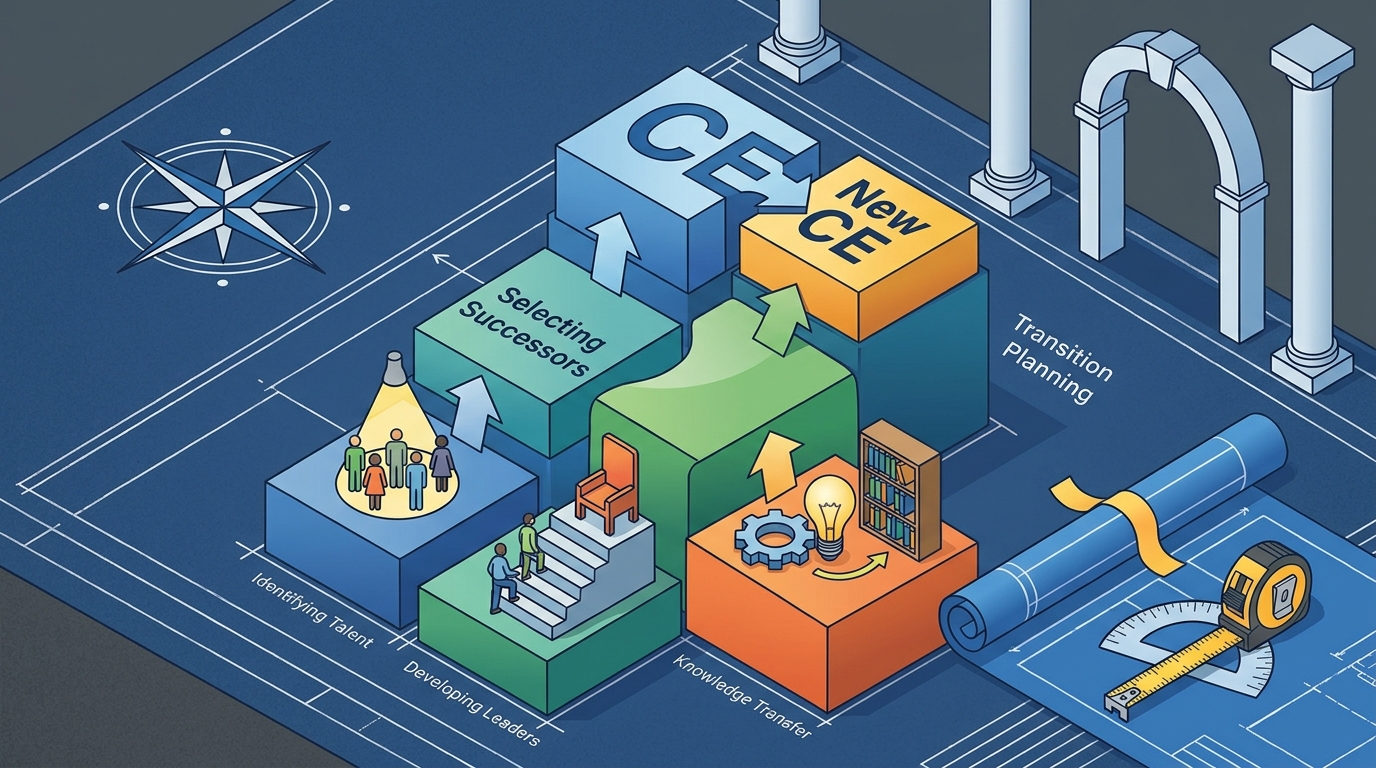
Identifying and Developing the Talent Pool
Once you have mapped the critical roles, the next step is identifying the talent pool. Succession planning is done to prepare broad pools of talent to be able to compete for key or essential positions in the organization. For example, your senior account managers are the talent pool for your future Head of Client Services. Your senior designers are the pool for your Creative Director.
However, identifying talent is not the same as developing it. Many agencies promote their best doers into leadership roles without teaching them how to lead. This is a common failure point. A great creative director who cannot manage a team, handle conflict, or read a P&L is a liability, not an asset. Your framework must include a development plan for each high-potential employee in the pool.
This development should be structured and intentional. It might include mentorship with the current leader, cross-functional projects, or formal leadership training. At Agency Management Institute, we often see agencies that have the talent but lack the structure to develop it. The framework bridges this gap by creating a clear path from "high potential" to "ready to lead."
Capturing Institutional Knowledge
One of the most overlooked aspects of agency succession is the transfer of institutional knowledge. In many small to mid-sized agencies, the "how" of the business lives in the owner's head. They know which clients are profitable, which vendors are reliable, and how to navigate a difficult creative brief. If that owner leaves, that knowledge walks out the door with them.
A solid framework includes a knowledge capture process. This is not just about writing a manual. It is about documenting the decision-making processes, the client relationships, and the operational workflows. You need to create a system where knowledge is shared, not hoarded. This might look like regular